Our Products
MSW & WTE
Solutions
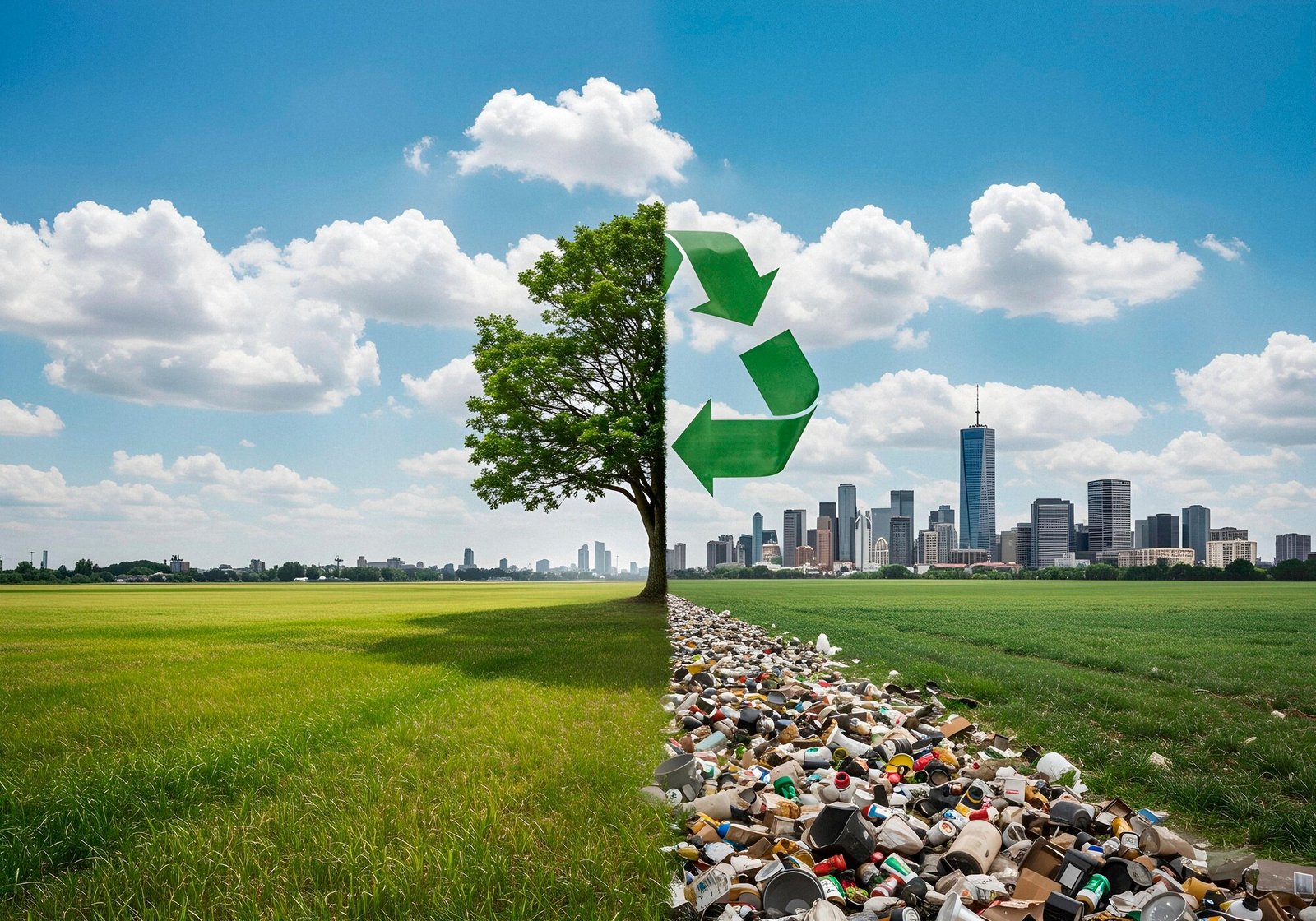
Transforming Municipal Solid Waste into cleaner energy solutions, supporting sustainable urban waste management, resource recovery, and future-ready power generation for a greener India.
 alt="Tree split in half, left side lush green representing environmental health, right side surrounded by waste and garbage representing pollution, recycling symbol above tree, cityscape visible in distant background, symbolizing contrast between sustainability and waste management challenges">